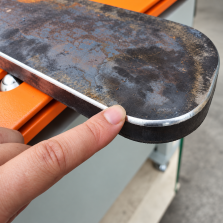
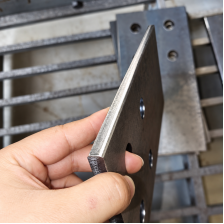
Sharp steel edges are difficult to coat evenly and can become early corrosion points. A Plate Edge Rounding Chamfering Machine replaces the sharp corner with a controlled radius, creating a more paint-ready surface for shipbuilding, structural steel and fabricated profiles. Compared with manual grinding, mechanical metal edge rounding improves radius consistency and reduces dependence on operator technique.
Why rounded edges matter to fabricators
| Production concern | Engineering effect | Buyer value |
|---|---|---|
| Sharp plate edges | Paint film may be thinner at a 90-degree corner. | A controlled R2 or R3 radius supports more uniform coating coverage. |
| Manual grinding | Radius and finish can vary between operators. | Milling provides repeatable geometry and predictable throughput. |
| Mixed plate shapes | Straight, round or shaped parts need stable handling. | A stationary table supports flexible small-batch and bulk processing. |
The GCM-R3T uses cold milling with a carbide-insert cutter to form the edge without creating an oxide layer. Its single-head design supports R2 and R3 edge radius processing in one pass. Search terms such as steel plate edge rounding machine, metal edge chamfering machine and edge rounding machine for paint preparation describe the same purchasing need: preparing safer edges with consistent geometry before blasting, painting or coating.
GCM R3T verified specifications
| Power supply | AC 380 V 50 Hz | Total power | 790 W plus 0.5-0.8 MPa |
| Spindle speed | 2800 r/min | Feed speed | 0-6000 mm/min |
| Plate thickness | 6-40 mm | Minimum length | 300 mm |
| Edge radius | R2 / R3 | Cutter | 1 x 60 mm, 3 inserts |
| Worktable height | 775-800 mm | Worktable size | 800 x 900 mm |
The two product pages below describe the same GCM-R3T configuration. Their exterior colors differ, but the model, working principle and performance parameters remain the same. Buyers can therefore select the preferred appearance without treating them as separate machines.
| Model | Picture | Effect |
|---|---|---|
| GCM-R3T | 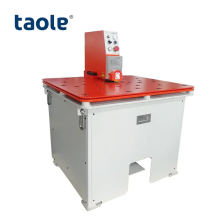 |
 |
| GCM-R3T |  |
 |
Buyer FAQs
| Question | Short answer |
|---|---|
| Which radius should a buyer specify? | Confirm R2 or R3 from the coating standard and drawing. |
| What plate data is needed for a quotation? | Material, thickness, width, length, shape and production volume. |
| Can a sample be tested before ordering? | Yes. A sample or drawing can confirm tooling and edge quality. |
For procurement teams, the key checks are required radius, material grade, plate dimensions and expected throughput. Matching these inputs to the GCM-R3T working range helps establish a repeatable paint preparation process and improves the consistency of finished steel edges.
Post time: Sep-29-2026