Choosing a plate beveling machine is primarily an engineering decision: the machine must match plate thickness, required bevel width, joint geometry and production rate. Compared with manual grinding or thermal cutting, a properly selected steel plate beveling machine uses cold milling to produce a repeatable edge without a heat affected surface, supporting controlled root faces and consistent fit up before welding.
Selection logic at a glance
|
Production question |
Engineering significance |
Configuration direction |
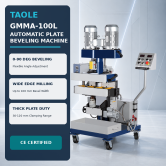
| How wide is the bevel? | Wide or deep preparations may require several passes and sufficient cutter capacity. | Select a wide bevel platform such as GMMA-100L. |
| Is throughput the constraint? | Two cutting heads reduce repeated handling on long production runs. | Use the twin-head GMMA-100D for continuous output. |
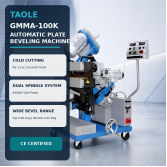
| Are both faces required? | K and X joints often require top and bottom machining and plate turnover. | Use GMMA-100K to mill both sides in one pass. |
For heavy fabrication, the key is not simply maximum capacity. The best automatic plate beveling machine is the one that removes the required volume at a stable feed rate while preserving the specified angle and root geometry. Surface finish also matters: all three systems use cold milling and state a finished roughness of Ra 3.2-6.3, helping downstream inspection and welding start from a consistent machined edge.
Verified product comparison
|
Model |
Plate thickness |
Bevel angle |
Max width |
Power |
Feed / design |
Best application |
||||
|
6-100 mm |
0-90 deg |
100 mm |
6520 W |
0-1500 mm/min |
Wide and deep V/Y or U/J preparations | |||||
|
6-100 mm |
0-90 deg |
60 mm |
Twin heads |
0.4-1.2 m/min |
High-volume plate edge production | |||||
|
6-100 mm |
Top 0-90 deg |
Top 60 mm |
6480 W |
0-1500 mm/min |
Simultaneous top and bottom K/X bevels | |||||
|
|
 |
 |
https://www.bevellingmachines.com/gmma-100l-heavy-duty-plate-beveling-machine.html | |||||||
|
|
 |
 |
https://www.bevellingmachines.com/gmma-100d-efficiency-steel-beveling-machine-with-double-heads.html | |||||||
|
|
 |
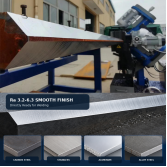 |
https://www.bevellingmachines.com/gmma-100k-double-sided-beveling-machine-for-metal-sheet.html | |||||||
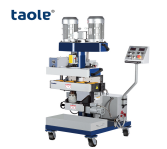
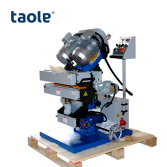
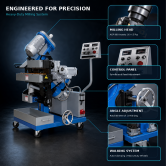
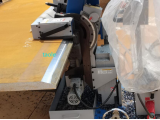
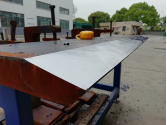
The heavy duty plate beveling machine GMMA-100L is the logical choice when bevel width reaches 100 mm. GMMA-100D adds two milling heads for production efficiency. For double-sided plate beveling and K/X bevel preparation, GMMA-100K machines the top and bottom edges during the same travel cycle, reducing plate turning and crane handling.
Frequently asked questions
|
Question |
Concise engineering answer |
| What does a plate beveling machine do? | It mills a controlled angle and root face along a plate edge so the joint is ready for repeatable welding and fit up. |
| Why use cold milling instead of grinding? | Cold milling provides controlled geometry and repeatability without the thermal oxidation associated with flame based preparation. |
| Which machine suits K or X joints? | GMMA-100K is designed for simultaneous top and bottom machining; confirm the required upper and lower angles and widths before selection. |
Selection should therefore begin with the drawing: plate thickness, bevel angle, root face, maximum bevel width and whether one or both faces must be machined. Matching those values to the verified machine envelope produces a more reliable weld preparation process than selecting equipment by motor size alone.
Post time: Sep-23-2026